Ask the person holding the leash, out loud, and stop if the answer is no. The ASPCA's bite-prevention page puts it as one question: "May I pet your dog?" The American Kennel Club uses the same gate: "Can I say hello to your dog?" A dog that looks friendly does not replace that question, and a no is the end of the greeting.
In this guide
Both groups then tell you to let the dog decide. Permission from the handler is the first yes. The dog approaching you is the second. A hand pushed at a face is neither.
What do you say, and what do you do if the answer is no?
Use a short question and wait. The AKC's greeting guide says the owner is the dog's spokesperson, because the dog cannot tell a stranger to go away. It also says people often keep coming after a no, with a line like "it's okay, I love dogs." That is the move the AKC calls unsafe. The owner's concern was the dog, not the stranger's feelings. A frightened dog does not change its mind because a stranger is fond of dogs in general. Trust the no and leave.
There are ordinary reasons for a no that have nothing to do with you. The AKC lists a few: the handler is working on a jumping habit and does not want a stranger to reward it, the dog has a sore spot, or the dog gets sharp when people crowd the owner. You will not see all of that from the sidewalk. A no does not need a justification you agree with. Greeting on a leash is a related problem. Two leashed dogs, and a person reaching in, are both situations where the leash is already doing a job.
How do you greet the dog after the handler says yes?
Stand where the dog can leave. The AKC says to turn your body slightly sideways and watch the dog with your peripheral vision, because a head-on approach and a hard stare read as a threat in dog body language. You can kneel to the dog's level if you are sure. If you are not sure, stay standing. Kneeling puts your face at bite height. Hold a closed fist out and let the dog come sniff it. Do not thrust the hand forward. The AKC's line is that the dog can smell you from a distance, and a sudden movement startles.
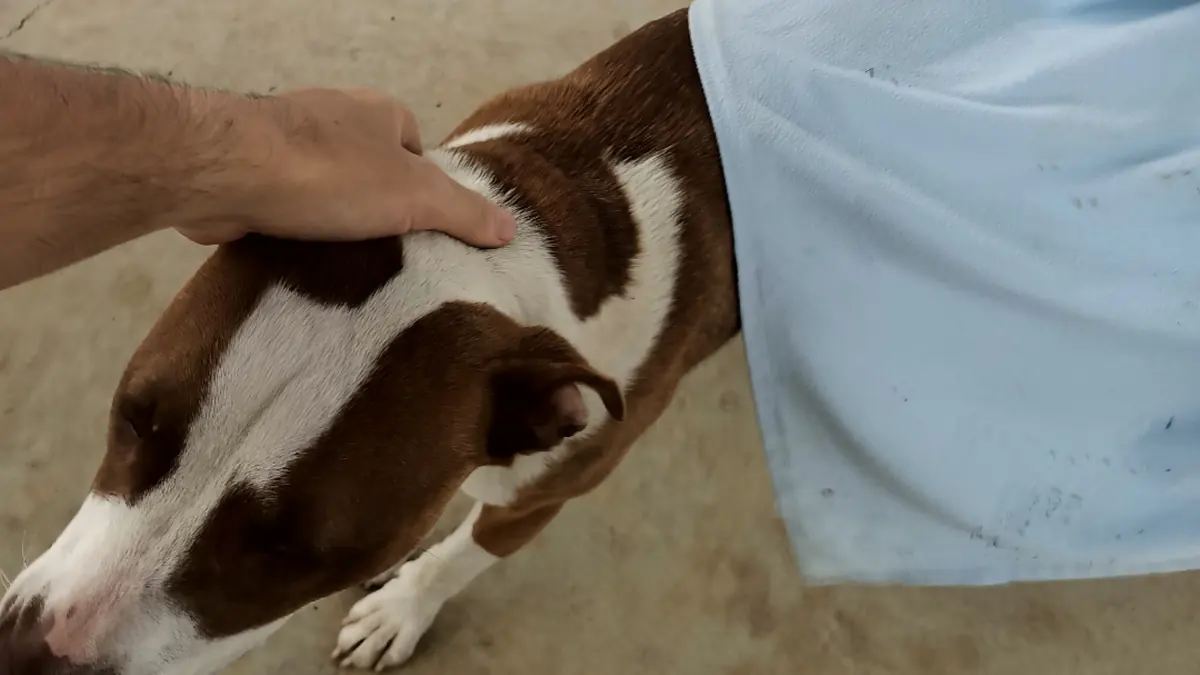
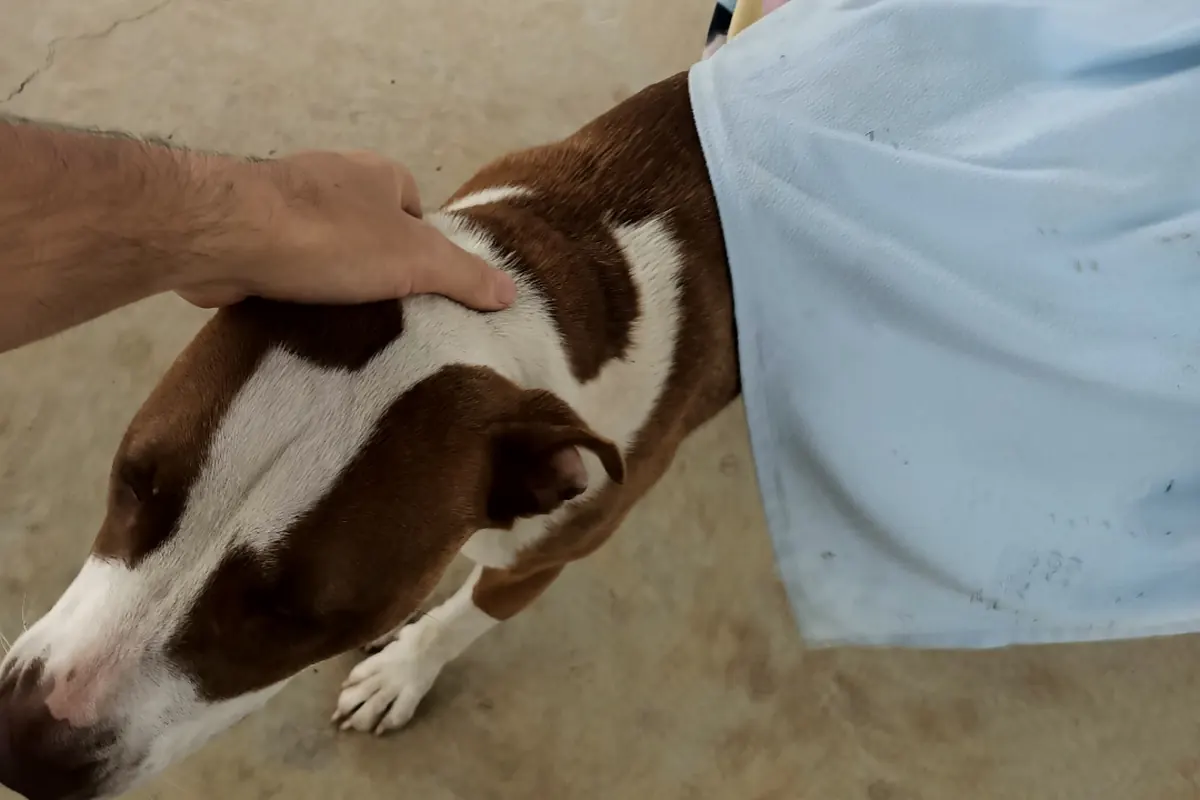
The ASPCA's sequence matches that shape. After permission, let the dog sniff a closed hand, then pet the shoulders or the chest. Do not pet the top of the head. If the dog looks uncomfortable, speak in a happy voice and take the hand away without a jerk. The AKC adds the neck, the side, and the back as reasonable places, and says to ask the owner if the dog has a favorite spot. It also says not to hug or restrain a strange dog. Many dogs tolerate a hug from their own people and do not tolerate one from a stranger. Go slowly. A few seconds may be the whole greeting.
Which dogs should you not approach at all?
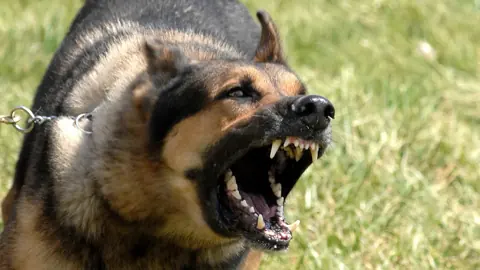
The ASPCA says to avoid dogs that are barking or growling, and to steer clear of dogs that are loose, behind a fence, or tied up. It also says not to touch a dog that is sleeping, eating, or chewing a toy or a bone. A startled dog is more likely to bite. The AKC parent guide says never approach an unattended dog, and do not reach over a fence or through a car window. If an unknown dog comes to you, the guide's instruction is "be a tree": stop, fold your arms, look at your feet, and stay until the dog leaves or someone helps. Do not run, yell, or swing at the dog.
The ASPCA's body-language list is the reason a wagging tail is not a yes. An aggressive dog may look bigger: ears forward, fur up, tail stiff and possibly wagging, a frozen stance, a stare, teeth, a growl, a lunge, a bark. A scared dog may look smaller: crouch, low head, lip licks, tail tucked, ears flat, a yawn, looking away, or rolling over. Dogs often show a mix, which the ASPCA reads as conflict. Its instruction is to avoid any dog showing fear, aggression, or anxiety, no matter what else the body is doing. Park body language is the longer version of that list. This page is the sidewalk version: you are the stranger.
What is the handler's half of the same moment?
If it is your dog, you are allowed to say no without a speech. The AKC's examples are training, pain, and a dog that guards the owner. A short "not today, thanks" matches the script those pages give the stranger. You can also set the greeting up so the stranger's hand never arrives at the head: "chest only" or "let him come to you." If your dog is loose, behind a fence, or tied, the ASPCA is telling strangers to skip you. Do not undo that advice by calling a stranger over to a tied dog.
Children need the same script, said in advance. The AKC parent guide and the ASPCA both say to supervise, and the ASPCA says never to leave a baby or a young child alone with a dog. A child who has practiced "ask first, closed hand, stop" is using the published steps. A child who has been told that every dog wants a hug is using the move both groups tell adults not to make. Kids at dog parks is the fenced version of the same supervision problem.
| Moment | What the pages say to do | What they say not to do |
|---|---|---|
| Before any touch | Ask the handler | Reach because the tail is moving |
| Handler says no | Stop and leave | "I love dogs" while you keep coming |
| Handler says yes | Closed hand, dog approaches, chest or side | Top of the head, hug, thrust, hard stare |
| Dog looks done | Take the hand away calmly | Chase the petting for one more minute |
| Loose, tied, fenced, or in a car | Do not start the greeting | Reach over the fence or into the window |
- Ask. "May I pet your dog?" is the ASPCA line. "Can I say hello?" is the AKC line. Either one, then wait.
- If you hear no, stop talking and give the pair room.
- If you hear yes, turn slightly sideways, offer a fist, and let the dog close the distance.
- Pet the chest, shoulders, side, or back. Skip the top of the head and skip the hug.
- Stop when the dog looks away, licks its lips, or moves off. That is the ASPCA's uncomfortable list, not a debate.
- Do not greet a dog that is loose, tied, behind a fence, in a car, asleep, eating, or chewing.
The AKC says some handlers misread their own dog and think more strangers will fix the fear. If the handler said yes and the dog will not approach, you still stop. The dog's choice is the last step, not a courtesy.
Frequently asked questions
How do you ask to pet a stranger's dog?
Ask the handler first. The ASPCA's wording is "May I pet your dog?" If the answer is no, stop. If it is yes, let the dog sniff a closed hand and pet the chest or shoulders, not the top of the head.
The dog looks friendly. Can you skip the question?
No. The AKC says to ask even when the dog seems to want the attention. The handler may be training, protecting a sore spot, or keeping people off a dog that does not want a crowd.
Where should you put your hand?
A closed fist for the sniff, then the chest, shoulders, side, neck, or back. Both the ASPCA and the AKC say to avoid the top of the head. The AKC also says not to hug a strange dog.
What if a loose dog comes up to you?
The AKC parent guide says be a tree: stop, fold your arms, look at your feet, and wait. Do not run. The ASPCA says to avoid loose, tied, and fenced dogs rather than starting a greeting.
Does a wagging tail mean yes?
Not by itself. The ASPCA says a stiff, wagging tail can be part of an aggressive posture, and a mix of signals means the dog is conflicted. Skip any dog showing fear or a threat.
Sources: ASPCA, Dog Bite Prevention (aspca.org/pet-care/dog-care/dog-bite-prevention), including the "May I pet your dog?" line, the closed-hand sniff, chest and shoulders, avoiding the top of the head, the warning not to touch a dog that is sleeping, eating, or chewing, and the body-language descriptions of aggressive, scared, and conflicted dogs; ASPCA news brief restating the same greeting steps; AKC, "How to Greet a Dog You Don't Know," including asking even when the dog looks friendly, accepting a no, the sideways stance, the closed fist, and the ban on hugs and head pats; AKC Safety Around Dogs parent guide, including "be a tree," no reaching over fences or into cars, and asking the owner before any petting. This is public safety guidance from those organizations, not a diagnosis.