In nine of the ten large U.S. systems checked here, a pet dog rides only inside a carrier. King County Metro, in Seattle, is the exception written into the county code: an animal may sit on a passenger's lap, and it is an infraction to let an animal take a seat, run without a leash, disturb other riders, or block the aisle. Boston's MBTA is the other special case. Small animals in a secure carrier may ride at any time, and a larger dog may ride on a leash outside weekday rush hours.
In this guide
There is no national transit pet law. A bag that satisfies Chicago does not answer Boston at 8 a.m. Confirm the agency page close to the trip. The ten systems below are the ones whose own pages we could read.
Which systems require a carrier at all times?
New York's MTA says pets are welcome on the subway, local bus, Long Island Rail Road, and Metro-North, and that on the subway or bus the pet must be in a bag or other container, carried so it does not annoy other riders. Service animals are exempt and must be harnessed or leashed. The agency says identification is not required for a service animal. Chicago's CTA allows only small pets in a closed travel carrier that one person can carry. The carrier must be able to fit under a seat, though it may ride on a lap, and it may not take a seat or block a path. Service animals may ride at all times. The CTA says it can remove any animal, including a service animal, that acts aggressively or poses a direct threat.
BART requires every non-service pet, including a comfort or emotional-support dog, in a secure enclosed carrier made for transporting pets. Service animals stay off seats and out of aisles, on a leash or harness. Washington Metro's manners page, marked updated May 19, 2026, says service animals are the only animals that may ride unconfined, and pets must be in a secure container. Metro's tariff says a small animal rides free in a kennel, cage, box, or other container small enough to carry without danger or offense, and the container may not occupy a seat. SEPTA's customer FAQ says pets may be on SEPTA property only in sturdy carriers that do not obstruct, and the animal cannot be disruptive. The FAQ applies that carrier rule to companion animals and to mental-health or emotional-support animals. Service animals may ride with a leash or harness.

Where is a leash enough, at least some of the time?
The MBTA allows small domestic animals at all times in a secure carrier, kept on a lap if possible and away from the doors. Larger pet dogs that do not fit in a carrier are not allowed during peak hours, which the T defines as weekdays 7 to 9 a.m. and 4 to 7 p.m. Outside those hours a larger dog may ride on a leash. The page says personnel may still refuse a pet when the train is crowded, during a holiday, or during a large event such as the Boston Marathon, and when the animal's behavior is the problem. Service animals are allowed at all times. A dog on a lap in a photograph of some other city's car is not the MBTA rule, and it is not the MTA rule either.
King County Metro's code of conduct, the civil-infraction list, prohibits "allowing any animal to occupy a seat on transit property, to run at large without a leash, to unreasonably disturb others, or obstruct flow of passenger or bus traffic." The next clause says an animal may occupy a passenger's lap. The fine listed for that class of infraction goes up to $250. The code does not say "carrier." Seattle's bus is the system in this ten where a leashed dog on a lap is the printed rule, not a loophole. King County's water taxi is a different sentence on a different page: well-behaved dogs on leashes, and cats in crates, ride free. Do not carry the water-taxi line onto a bus, or the bus line onto the boat.
What do Los Angeles, Portland, and Atlanta add?
LA Metro's accessibility guide says pets and emotional-support animals must be in enclosed carriers. Service animals are welcome without certification, must stay under control, and must perform a task related to a disability. TriMet's help article, updated July 1, 2022, says pets and companion animals are allowed on buses and trains only in a secure enclosed carrier. A service animal does not need a carrier. The operator may ask to confirm that the animal is a service animal. MARTA says service animals are the only animals that may ride unconfined on trains, the streetcar, and buses. A pet may ride in a secure rigid carrier with a lock or latch, one the animal cannot escape. The customer code of conduct repeats that carriers must be rigid, must have locks or latches, and must fit on the customer's lap.
MARTA's "rigid" and "lock or latch" line is stricter than a soft bag that merely zips. A plaid tote that satisfies a loose reading of the MTA's "bag or other container" can fail Atlanta's code. Read the adjective. Soft, rigid, under the seat, on the lap, and off the seat are different tests.
| System | Pet dog | The detail that changes the trip |
|---|---|---|
| MTA, New York | Bag or container | Carried so it does not annoy riders |
| CTA, Chicago | Closed carrier, one person | Must be able to fit under a seat |
| BART | Secure enclosed carrier | Comfort dogs are pets, not service animals |
| WMATA, Washington | Secure container | Container may not take a seat. Page updated May 19, 2026 |
| MBTA, Boston | Carrier any time. Larger dog on leash off-peak | No large dogs weekdays 7 to 9 a.m. or 4 to 7 p.m. |
| SEPTA, Philadelphia | Sturdy, non-obstructive carrier | Same carrier rule for support animals |
| LA Metro | Enclosed carrier | Support animals included in the carrier rule |
| TriMet, Portland | Secure enclosed carrier | Help article dated July 1, 2022 |
| MARTA, Atlanta | Rigid carrier, lock or latch, on the lap | A soft bag may not qualify |
| King County Metro | Leashed, on a lap, not on a seat | Infraction up to $250. Water taxi is a separate rule |
What about a service animal on the same systems?
Every agency above lets a service animal ride without a carrier when the animal meets that agency's definition and stays under the handler's control. Several of them copy the federal line that a comfort or emotional-support animal is not a service animal. Washington's tariff says so in those words. BART says so. The CTA points at Department of Transportation rules. The difference between those two labels is the difference between a leash and a carrier on these vehicles. Uber and Lyft use still another policy, because a car is not a subway.
A handler can still be told to leave if the animal is out of control or is a direct threat. The CTA prints that removal right. The MTA's accessibility page says a service animal should be harnessed or leashed unless the disability prevents it or the device interferes with the task. None of these pages says a vest replaces the definition.
- New York, Chicago, BART, Washington, Philadelphia, Los Angeles, Portland, Atlanta: put the pet in a carrier before you reach the fare gate.
- Atlanta: rigid carrier, with a latch, on your lap. Do not assume a soft tote is enough.
- Boston: a dog that does not fit in a carrier waits until after 9 a.m. and rides before 4 p.m., or after 7 p.m., on a leash. Weekends are off-peak on the page we read. Staff can still say no in a crush.
- Seattle buses: leash, lap, not a seat, not in the aisle. The water taxi allows leashed dogs and crated cats. Different page.
- A support animal follows the pet rule unless the agency has called it a service animal. Most of these have not.
- Re-read the agency page the week you travel. The Washington manners page already carries a 2026 update date.
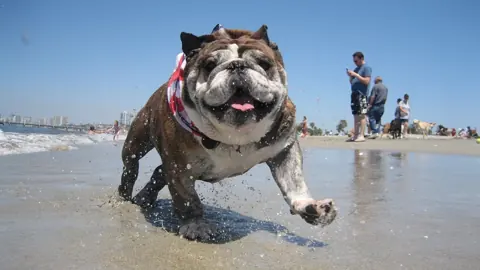
People post pictures of dogs loose on trains. The MTA rule is a container. The MBTA rush-hour rule is a container for any dog that is not a service animal. King County is the system in this list that actually writes "lap" into the code. A picture from an unnamed car does not move your city onto that list.
Frequently asked questions
Can a dog ride the New York subway?
Yes, in a bag or other container, carried so it does not annoy other riders. That is the MTA's pet line for subway and bus. A service animal is exempt and must be leashed or harnessed.
Do all cities use the same carrier rule?
No. Eight of the ten systems here want a carrier whenever the dog is a pet. Boston allows a larger leashed dog outside weekday peaks. King County Metro allows a leashed animal on a lap and forbids it from occupying a seat.
Are emotional support dogs treated as service animals?
Not on the BART, Washington Metro, SEPTA, or LA Metro pages we read. Those pages put comfort or support animals under the carrier rule. Check the system you are riding.
Can the operator refuse the dog anyway?
Yes on several of these pages, when the animal is aggressive, a direct threat, or, on the MBTA, when crowding or a special event makes the pet a problem. A carrier is not a guarantee if the dog is screaming or the car is packed.
Does this cover Amtrak or a rideshare?
No. Amtrak publishes its own pet rule, and rideshare companies publish theirs. A subway carrier does not transfer.
Sources: MTA, Pets on subways, buses, and railroads (mta.info/guides/pets), and MTA service-animal page; CTA policies and practices, pets and service animals; BART, Service Animals/Pets (bart.gov/guide/pets); WMATA manners page, updated May 19, 2026, and WMATA Tariff 39 on carriage of small animals; MBTA rider rules, animals on the T, including weekday peak hours 7 to 9 a.m. and 4 to 7 p.m.; SEPTA FAQ on pets in sturdy carriers; LA Metro accessibility guide, enclosed carriers for pets and emotional-support animals; TriMet help article on pets, updated July 1, 2022; MARTA, Riding with Kids and Pets, and the MARTA Customer Code of Conduct on rigid carriers with locks or latches that fit on a lap; King County Metro code of conduct, animal infraction, lap allowed, fine up to $250, and the separate water-taxi pet line. Confirm the live page before you ride.