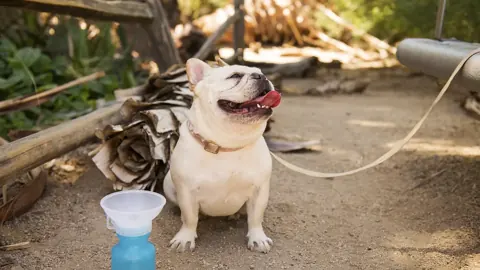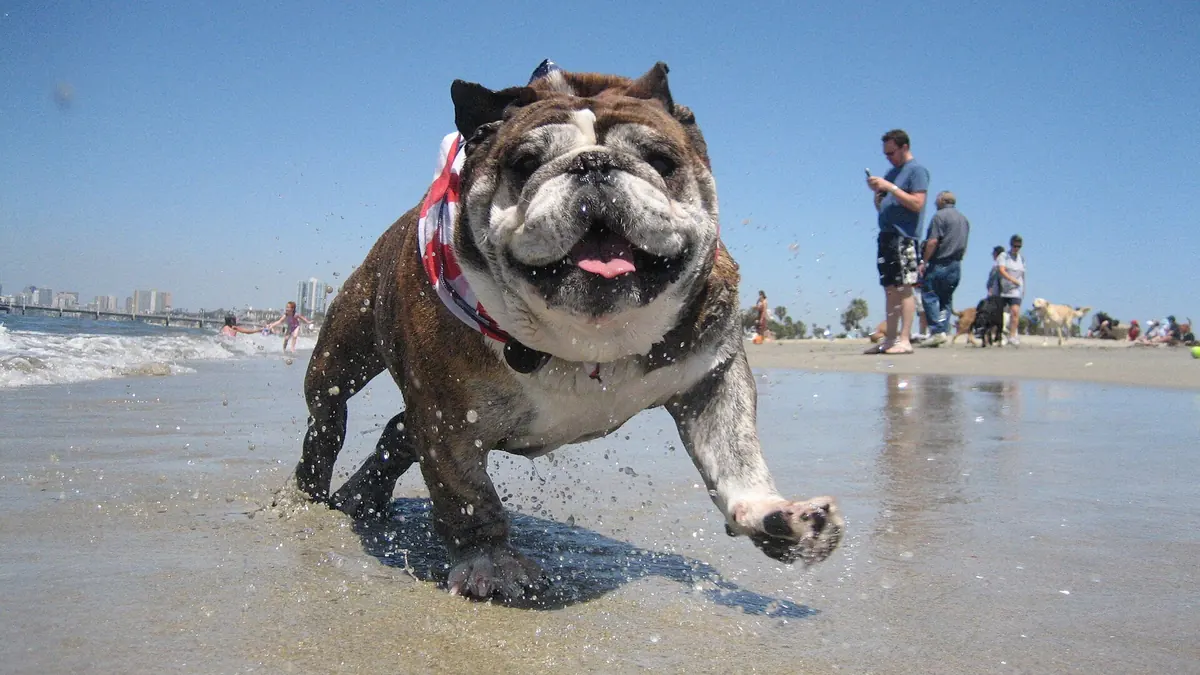
Before you take your dog to the beach, check three things: whether dogs are allowed at all (many city beaches ban them, at least in summer), whether they may be off leash, and whether the water is safe — toxic algae has killed dogs in lakes across the US. Then pack fresh drinking water, a towel and a long enough leash, and go early or late to avoid hot sand.
In this guide
Dog beach rules vary more than almost any other dog rule. Below are real examples from big US cities, the safety issues that matter most, and a packing list.
Beach rules are all over the map
From the cities we researched, here's how different the rules can be:
| City | Dogs on the beach? |
|---|---|
| San Diego | Dog Beach in Ocean Beach is off-leash and open 24 hours, and Fiesta Island in Mission Bay is leash-optional. Elsewhere on Mission Bay, dogs are banned from 9 a.m. to 4 p.m. (Oct 31–Mar 31) or 9 a.m. to 6 p.m. (Apr 1–Oct 31), and must be leashed at other times. |
| New York City | Dogs may be on the sand only from October 2 through the Friday before Memorial Day. In season, they're banned from the sand — and at Coney Island, Brighton and Manhattan Beach, from the boardwalk too. |
| Chicago | The Montrose Beach Dog Friendly Area, 3.83 acres at the north end of Montrose Beach, is the city's big lakefront option. A DFA tag is required. |
| Seattle | Dogs are not allowed on Seattle park beaches at any time. Magnuson Park's off-leash area is the only one in the city with water access, on Lake Washington. |
| Los Angeles area | Dogs are not allowed on most LA County beaches. Rosie's Dog Beach in Long Beach is the best-known exception. |
| San Francisco | The coastal beaches are largely federal land (Golden Gate National Recreation Area), with their own dog zones and seasonal closures to protect the western snowy plover. |
| Austin | No ocean, but the lakefront favorites — Red Bud Isle and Auditorium Shores — come with a city advisory against letting dogs swim in Lady Bird Lake because of toxic algae. |
The lesson: "dog-friendly beach" can mean 24/7 off-leash in one city and a total ban in the next. Search the specific beach's rules, and read the sign at the entrance.
Seasonal and time-of-day rules
Many beaches allow dogs only at certain times of year or day, to avoid crowds or protect wildlife:
- Summer bans are common on busy swimming beaches (New York's rule is a classic example).
- Time windows — early morning and evening only — are common around bays and resort beaches (San Diego's Mission Bay rules work this way).
- Nesting seasons close parts of beaches to dogs entirely. In San Diego, buffer zones around least tern nesting sites on Fiesta Island close from April 15 to September 15; in San Francisco, parts of the coast protect snowy plovers.
Wildlife closures are enforced seriously. Birds nesting on the sand are easily disturbed, and a dog running through a nesting area can destroy eggs and chicks.
Water safety
Toxic algae in lakes and rivers
This is the risk most owners don't know about. Some blue-green algae (cyanobacteria) produce toxins that can kill a dog within hours. In Austin, the city attributes the deaths of six dogs since 2019 to algae toxins in Lady Bird Lake.
- Stay out of water that looks like pea soup, has scum or mats on the surface, or is discolored.
- Check local advisories before lake or river swims, especially in late summer.
- Rinse your dog with fresh water after any swim, before it can lick its coat.
- Watch for symptoms — drooling, vomiting, stumbling, weakness or seizures — and get to a vet immediately if they appear.
Saltwater
Dogs who gulp seawater while playing can get sick; large amounts can be dangerous. Offer fresh water often so your dog isn't tempted to drink the ocean, and take breaks from fetch in the waves.
Currents and waves
Strong swimmers can still be pulled out by rip currents. Keep play in shallow water, don't throw toys past the break, and consider a dog life jacket for weaker swimmers, flat-faced breeds and seniors.
Sun, sand and heat
- Hot sand burns paws. Test it with your hand. Midday summer sand can be far hotter than the air.
- Shade and rest. Bring an umbrella or find shade; running on sand is hard work.
- Sunburn is real for dogs with short, light or thin coats, especially on the nose and belly. Ask your vet about a dog-safe sunscreen.
- Go early or late. It's cooler, and on many beaches that's also when dogs are allowed.
Beach etiquette
- Pick up, including on sand. Waste left on beaches washes into the water.
- Keep your dog away from other people's picnics, towels and children.
- Stay in the dog zone. Off-leash dog beaches usually have boundaries; the rest of the beach may be leash-only or dog-free.
- Don't let your dog chase birds. Many cities, including New York, specifically prohibit it.
- Leash up near the parking lot and walkways.
Packing list
- Fresh drinking water and a bowl (more than you think)
- Waste bags
- Leash — and check local length limits
- Towels, and a sheet or blanket for the car
- Shade (umbrella or pop-up tent)
- Dog life jacket for weaker swimmers
- A rinse bottle of fresh water for after swimming
- Your dog's tags and, where required, permits
After the beach
- Rinse off salt, sand and any lake water.
- Check paws for cuts from shells or rocks.
- Dry the ears well, especially for floppy-eared swimmers.
- Watch for signs of trouble — vomiting, diarrhea, lethargy — for the rest of the day.
Choosing a dog life jacket
Not every dog is a natural swimmer. A life jacket is a good idea for weak swimmers, flat-faced breeds, seniors and any dog on a boat or in open water. Look for:
- A handle on the back, so you can lift your dog out of the water.
- Bright colors for visibility.
- A snug, adjustable fit that your dog can't back out of.
- Buoyancy under the chin to help keep the head up.
Let your dog get used to it on dry land first, then in shallow water.
Frequently asked questions
Are dogs allowed on public beaches in the US?
It depends entirely on the beach. Some cities ban dogs from beaches year-round, others only in summer, and a few have designated off-leash dog beaches, like Dog Beach in San Diego.
Can dogs swim in lakes?
Often, yes — but check for toxic algae advisories first. Blue-green algae blooms can be deadly to dogs.
Is it safe for my dog to drink ocean water?
No. Small amounts while playing are common, but larger amounts can make dogs sick. Offer fresh water frequently.
When can I take my dog to the beach in New York City?
From October 2 through the Friday before Memorial Day. During the summer season, dogs aren't allowed on the sand.
Rules cited come from the official sources of the cities named (NYC Parks, City of San Diego, Chicago Park District, Seattle Parks and Recreation, City of Austin), as published in 2026. This guide is general information, not veterinary advice.