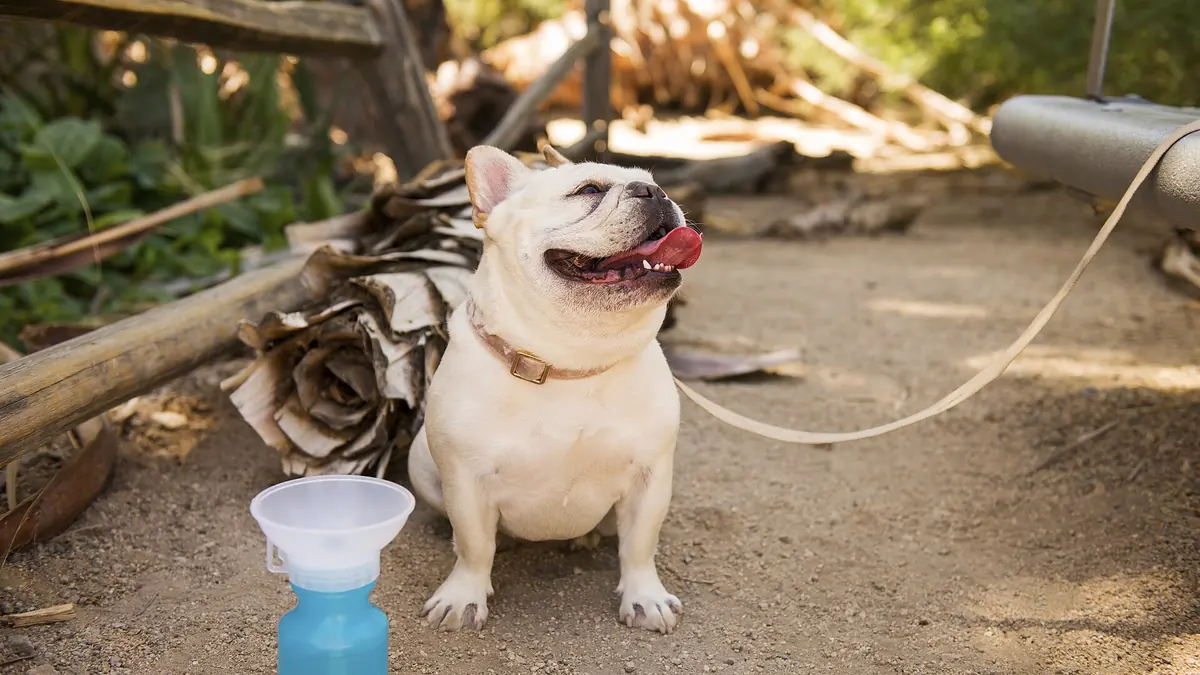
Dogs are welcome in many US national parks, but where they can go varies enormously from park to park. The one rule that applies everywhere: your dog must be on a leash no longer than 6 feet at all times. Some parks, like Acadia, open about 100 miles of hiking trails to leashed dogs; others, like Yellowstone, keep dogs off every trail and boardwalk and limit them to areas near roads, parking lots and campgrounds.
In this guide
This guide explains the National Park Service's B.A.R.K. Ranger principles, compares three famous parks with very different rules, and covers how to plan a national park trip with your dog.
The rule everywhere: 6 feet, always
Federal regulations and the National Park Service's own guidance require pets to be on a leash no longer than 6 feet, at all times. There are no off-leash areas in national parks. Retractable leashes extended past 6 feet don't comply.
Beyond that, each park sets its own rules about where pets may go. The NPS advice is simple: always check with the specific park before you visit.
The B.A.R.K. Ranger principles
The National Park Service sums up its pet rules in four letters:
| Letter | Principle | Why it matters |
|---|---|---|
| B | Bag your pet's waste | Pet waste can introduce harmful bacteria into fresh water sources and pass diseases to wildlife. |
| A | Always leash your pet | 6 feet maximum — protects your dog, other visitors and wildlife. |
| R | Respect wildlife | Dogs can disturb, chase or be injured by wild animals, and can transmit or catch diseases. |
| K | Know where you can go | Every park has its own list of places where pets are and aren't allowed. |
How your dog becomes a B.A.R.K. Ranger
Each participating park designs its own program. Depending on the park, it might be a ranger-led walk, a pledge you take with your pet, or an honor system where you simply follow the principles. Many parks offer a tag or badge for your dog's collar — a popular souvenir for dog owners who collect them across parks. Ask at the visitor center.
Three parks, three very different rules
Acadia National Park (Maine): very dog-friendly
Acadia is often cited as one of the most dog-friendly national parks, and the numbers show why: pets are permitted on about 100 miles of hiking trails and 45 miles of carriage roads. Its campgrounds at Blackwoods, Seawall and Schoodic Woods allow pets.
Restrictions still apply:
- The six cliff and ladder trails — Beehive, Beech Cliffs, Ladder, Perpendicular, Precipice and Jordan Cliffs (between Penobscot East and the carriage road) — are closed to pets.
- Sand Beach and Echo Lake beach restrict pets from May 15 to October 15.
- On Isle au Haut, pets are allowed for day hiking only.
Grand Canyon National Park (Arizona): above the rim only
At the Grand Canyon, leashed pets can enjoy the rim but not the canyon itself:
- Allowed: the Rim Trail, overlooks along the South Rim Drive, the Cedar Point Nature Trail, the North Rim's Chasm View Nature Trail and the Rim Rock Trail.
- Not allowed: any trail below the rim, other hiking trails, cross-country ski trails, inner canyon wilderness, and park shuttle buses.
- Seasonal: the Rim Rock Trail closes to pets in summer, when deer protecting fawns can be aggressive.
If you want to hike into the canyon, the park has a kennel at the South Rim for boarding dogs while you're below the rim.
Yellowstone National Park (Wyoming, Montana, Idaho): very restrictive
Yellowstone is one of the most restrictive parks for dogs, for good reason — bison, bears, wolves and dangerous thermal features.
- Allowed: developed areas, and anywhere within 100 feet of roads, parking areas and campgrounds — except thermal areas.
- Not allowed: trails, boardwalks, the backcountry and thermal areas.
- Pets must be under physical control at all times: caged, crated, or on a leash of 6 feet or less.
In practice, a Yellowstone trip with a dog means short walks near your car or campground, with the famous geyser boardwalks off limits. Many visitors plan for a boarding option outside the park on hiking days.
What the comparison teaches
| Park | Trails for dogs | Best for |
|---|---|---|
| Acadia | About 100 miles of trails + 45 miles of carriage roads | A true hiking trip with your dog |
| Grand Canyon | Rim Trail and a few rim-top trails; nothing below the rim | Scenic rim walks; board your dog to hike down |
| Yellowstone | None — only within 100 feet of roads, parking and campgrounds | A road trip where your dog stays near the car |
Before you plan any national park trip, look up that park's "Pets" page on nps.gov. It will list exactly which trails, campgrounds, beaches and buildings allow dogs.
Planning a national park trip with your dog
Before you go
- Read the park's pet page and note which trails are open to dogs.
- Book pet-friendly lodging or campgrounds. Not all park lodges accept pets.
- Find a boarding option if you'll do hikes your dog can't join.
- Bring vaccination records for kennels.
On the trail
- Check your dog's fitness. The NPS asks owners to make sure their pet is healthy, has trail manners and is fit enough for the hike.
- Carry extra water and light snacks for your dog.
- Watch for overheating: excessive panting, drooling or vomiting mean it's time to rest in shade and turn back.
- Keep away from wildlife, for your dog's safety and theirs.
- Pack out the waste. Trail trash cans may be far apart.
Never leave your dog in the car
Parking lots at popular overlooks get hot, and a car heats up quickly even when the air feels mild. If your dog can't come along on an activity, it needs a kennel or a companion — not the car.
Service animals
Service animals are treated differently from pets under federal law and are generally allowed in places pets are not. Emotional support animals and pets in training don't have the same access. Check the specific park's policy if you're traveling with a service animal.
Frequently asked questions
Are dogs allowed in national parks?
Yes, in many of them — but usually only in certain areas. Every park sets its own rules about trails, campgrounds, beaches and buildings, and dogs must always be on a 6-foot leash.
What is the most dog-friendly national park?
Acadia is one of the most dog-friendly, with about 100 miles of trails and 45 miles of carriage roads open to leashed pets.
Can dogs go on trails in Yellowstone?
No. Pets aren't allowed on Yellowstone's trails, boardwalks, backcountry or thermal areas. They're allowed within 100 feet of roads, parking areas and campgrounds.
Can I take my dog below the rim at the Grand Canyon?
No. Pets aren't allowed on trails below the rim. Leashed dogs can walk the Rim Trail and several other rim-top trails, and the park has a kennel at the South Rim.
What is a B.A.R.K. Ranger?
It's a National Park Service program built on four principles — Bag your pet's waste, Always leash your pet, Respect wildlife, Know where you can go. Each park runs its own version, often with a tag or badge for your dog.
Sources: National Park Service — Pets, Be a B.A.R.K. Ranger, Hiking with Pets; Acadia, Grand Canyon and Yellowstone pet pages (2026). Rules change by season — always check the park's current pet page before you go.

.jpg)