Good dog park etiquette comes down to three things: only bring a dog that is healthy, vaccinated and actually enjoys other dogs, watch your dog the whole time, and step in early — before play turns into a problem. Almost every rule posted at a park gate is a version of one of those three.
In this guide
Below are the 15 rules that matter most, why each one exists, and what to do when another owner isn't following them.
Before you go
1. Check that your dog is licensed and vaccinated
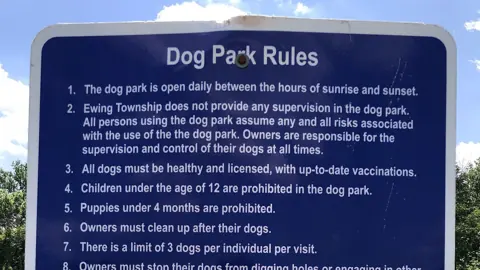
Most city-run dog parks in the US require a current rabies vaccination and a city or county dog license, and many post it on the gate sign. Some parks also require that the tag be on the collar while inside. Rangers rarely check, but if there is ever a bite, this is the first thing anyone asks for.
2. Leave puppies under four months at home
Many parks set a minimum age — Chicago, Houston and Nashville all post "no puppies under four months" — because young puppies haven't finished their vaccine series. A crowded dog park is also a lot for a puppy to process. Short, calm meetings with one or two known adult dogs teach more.
3. Don't bring a dog in heat — or one that is sick
An unspayed female in heat will change the behavior of every intact male in the park, and that is how scuffles start. The same goes for any dog with a cough, diarrhea or anything contagious: skip the park until it has cleared up.
4. Tire your dog out a little first
A ten-minute walk before the gate takes the edge off. Dogs that burst in after being home alone all day are the ones most likely to overwhelm others in the first few minutes, which is exactly when most conflicts happen.
At the gate
5. Use the double gate correctly
Most fenced parks have an airlock: two gates with a small pen between them. Close the outer gate behind you before opening the inner one. Never prop either gate open, and never let your dog wait inside the pen while other dogs crowd the inner gate — that tight space is where a lot of tension happens.
6. Take the leash off inside the transition pen
A leashed dog meeting a group of loose dogs feels trapped: it can't move away, and it often reacts by growling or lunging. Unclip in the airlock, then walk in. If the park has no airlock, unclip as soon as you're inside and move away from the entrance.
7. Look before you enter
Take ten seconds to read the room. If a pack is already running hard, or one dog is clearly bullying others, it is fine to wait or come back later. Choosing a quieter time is part of good etiquette, not a failure.
While you're inside
8. Put the phone away
This is the rule broken most often. Owners who are scrolling don't see the stiff body, the raised hackles or the dog being pinned repeatedly — the early signs that let you step in calmly instead of pulling dogs apart.
9. Pick up after your dog, every time
Bring your own bags even if the park has a dispenser; dispensers run out. Waste left behind is the most common complaint that leads cities to add restrictions or close parks.
10. Keep toys and food out of shared spaces
Tennis balls and treats are the two biggest triggers for resource guarding. If your dog lives for fetch, go at a quiet time or use a separate area. Never feed other people's dogs, and keep your own snacks in your pocket.
11. Keep small dogs in the small-dog area
Many parks have a separate section for small dogs. Most cities just say "small dogs" and leave the call to you; Fort Worth is one of the few that sets a number — under 40 pounds. The rule isn't about size snobbery: a large dog playing normally can injure a small dog by accident, and a small dog's quick movements can look like prey to some big dogs.
12. Leave children at home, or keep them beside you
Many parks set a minimum age for children or require that they stay with an adult. Charlotte's county parks don't allow children under 12 inside at all; Chicago and Atlanta require an adult with them. Running kids excite dogs, and a child at eye level with an unfamiliar dog is at real risk.
Reading play and knowing when to step in
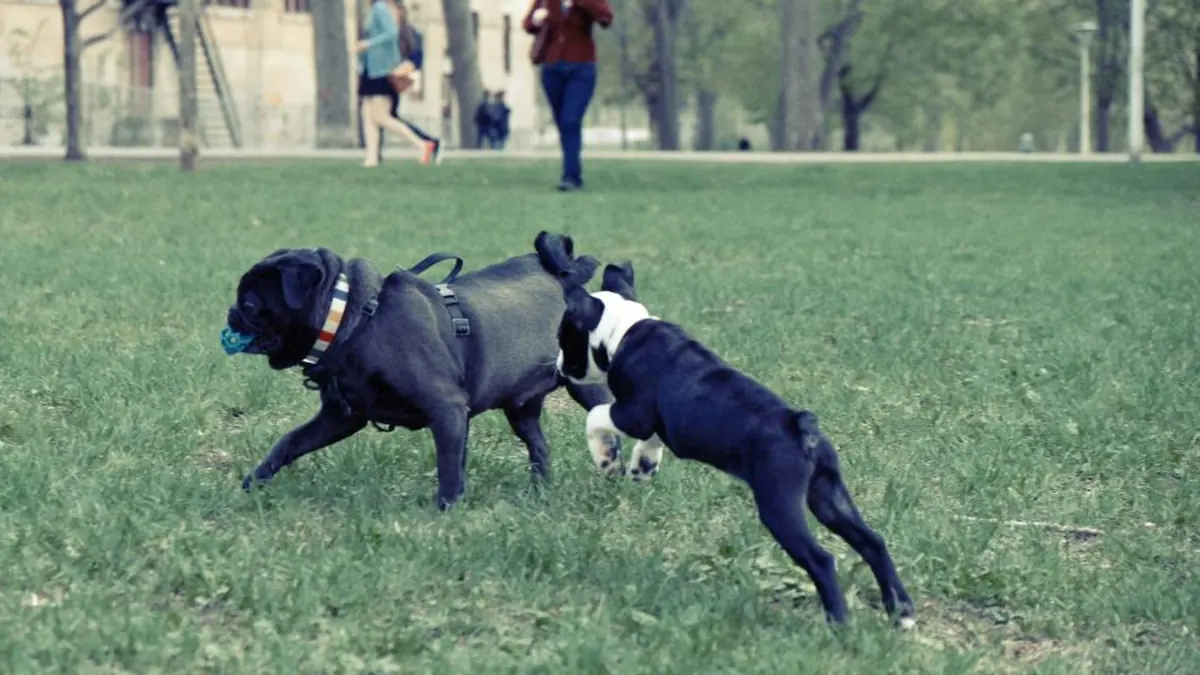
Healthy dog play looks chaotic, but it has a rhythm. Knowing it is what lets you intervene early without overreacting.
| Normal play | Time to step in |
|---|---|
| Loose, wiggly bodies | Stiff, frozen body |
| Play bows, bouncy movement | Hard stare, lip curled, hackles up |
| Dogs take turns chasing and being chased | One dog always chasing, the other trying to escape |
| Frequent short pauses | Play escalating with no breaks |
| Both dogs come back for more | One dog hiding behind its owner or under a bench |
| Noisy growling during wrestling | A group of dogs piling on one dog |
13. Call your dog out before it's a fight
If you see the signs on the right side of the table, call your dog, clip the leash on and take a short break — or leave. You don't need to decide whose fault it is. The owner who leaves early is the one practicing good etiquette.
14. If a fight does happen, don't grab collars
Reaching between fighting dogs is how owners get bitten. The safer method is for each owner to grab their own dog by the back legs, lift them like a wheelbarrow and back away in opposite directions. A loud noise or a jacket thrown over the dogs can also break their focus.
15. Exchange contact details after any incident
If there was a bite or an injury, get the other owner's name, phone number and the dog's vaccination status, even if everyone seems fine. Some injuries only show up later.
When another owner isn't following the rules
This is the awkward part, and there's no perfect script. A few approaches that usually work:
- Talk about the dogs, not the person. "I think my dog's had enough of the chasing — mind if we give them a break?" lands better than "your dog is being aggressive."
- Remove your own dog. You can't control other dogs, but you can always leave. Coming back at a quieter hour is often the simplest fix.
- Report patterns, not single moments. If the same dog causes trouble repeatedly, most parks list a parks department number on the entrance sign.
Is the dog park the right fit for your dog?
Dog parks are great for social, confident dogs. They are not the right place for every dog, and that is fine. A dog park is probably not a good fit if your dog:
- guards toys, food or you;
- gets overwhelmed and tries to hide;
- doesn't reliably come back when called;
- plays so roughly that other dogs keep trying to get away.
For those dogs, a quiet trail, a long walk, or a play date with one known dog usually does more good than a crowded park.
Quick reference: the 15 rules
- Licensed and vaccinated
- No puppies under about four months
- No dogs in heat or sick
- Walk first, park second
- Use the double gate — close one before opening the other
- Leash off in the airlock
- Read the room before entering
- Phone away, eyes on your dog
- Pick up every time
- No toys or food in shared spaces
- Small dogs in the small-dog area
- Kids stay home or stay close
- Call your dog out early
- Never grab collars in a fight
- Exchange details after any incident
Rules vary from park to park, so always read the sign at the gate — it overrides any general guide, including this one.
Frequently asked questions
What is the most important dog park rule?
Watch your dog the whole time. Almost every problem at a dog park starts with signs an attentive owner would have seen — stiff body, hard stare, one dog always being chased — and could have stopped by calling the dog out early.
How old does a puppy have to be to go to a dog park?
Check the sign at your park. Many city parks, including those in Chicago, Houston and Nashville, set the minimum at four months, because younger puppies haven't finished their vaccines.
Can I bring treats or toys to the dog park?
It's best not to in shared areas. Food and balls are the most common triggers for resource guarding, and some parks ban food outright. If your dog loves fetch, go when the park is quiet.
Should I take the leash off before entering?
Yes — in the transition pen between the two gates, if there is one. A leashed dog surrounded by loose dogs feels trapped and is more likely to react.
What should I do if my dog gets into a fight?
Don't grab collars or put your hands near the dogs' heads. Separate them by distracting them or lifting the back legs, leash your dog, leave, and exchange contact and vaccination details with the other owner.
Sources: posted off-leash area rules from the park departments of the 20 cities in our guides — see Dog Park Rules in 20 Big US Cities, Compared for the full table and links. Rules vary by park; the sign at the gate always wins.