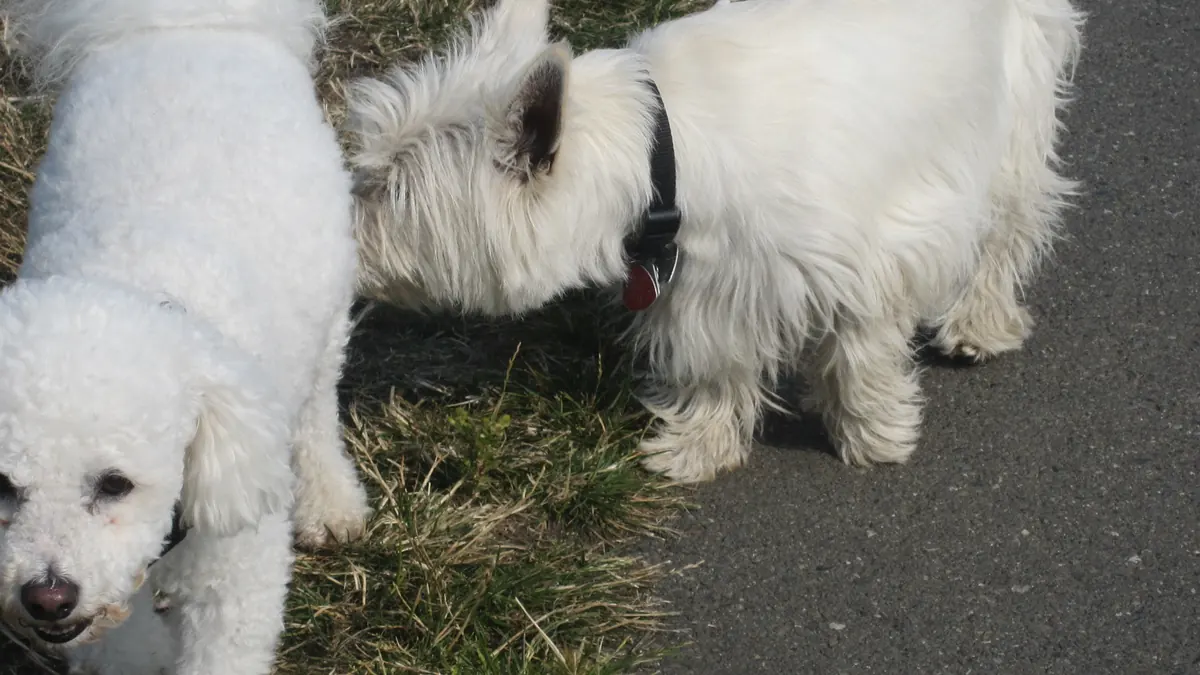
To introduce two dogs, start on neutral ground, like a quiet street or park neither dog thinks of as home, with each dog on a loose leash and a separate handler. Walk them side by side at a distance first, then let them sniff briefly, a few seconds, and walk on. Watch for loose, wiggly bodies (good) versus stiffness and hard stares (slow down). At home, remove toys, food bowls and chews at first, and supervise until you're sure they get along.
In this guide
- Step by step: how do I introduce two dogs?
- What signs mean it's going well, or not?
- What should I do at home the first days?
- How do baby gates and crates help?
- How do I introduce a puppy to an older dog?
- What should the first week look like?
- Does it matter if both dogs are the same sex?
- How long does it take for two dogs to get along?
- Is the dog park a good place for a first meeting?
- What if the introduction goes badly?
- What about visiting a friend's dog over the holidays?
- Frequently asked questions
Most introductions go wrong because they're rushed: two excited dogs, face to face, in a doorway, on tight leashes. All four of those make tension more likely.
Step by step: how do I introduce two dogs?
- Pick neutral ground. Not your yard or house. A quiet sidewalk or an empty part of a park works.
- Use two people, one per dog, with loose leashes. A tight leash tells a dog something is wrong.
- Walk in parallel at a distance where both dogs stay calm. Slowly close the gap.
- Let them sniff briefly, about three seconds, then call them away and walk on. Repeat.
- Watch body language. If both stay loose, let them interact a bit longer.
- Walk home together, and go in one at a time.
What signs mean it's going well, or not?
| Going well | Slow down |
|---|---|
| Loose, curvy bodies | Stiff, frozen body |
| Play bow | Hard stare |
| Sniffing, then moving on | Hackles up and staying up |
| Relaxed open mouth | Lips pulled back, growling |
| Taking turns approaching | One dog constantly avoiding or hiding |
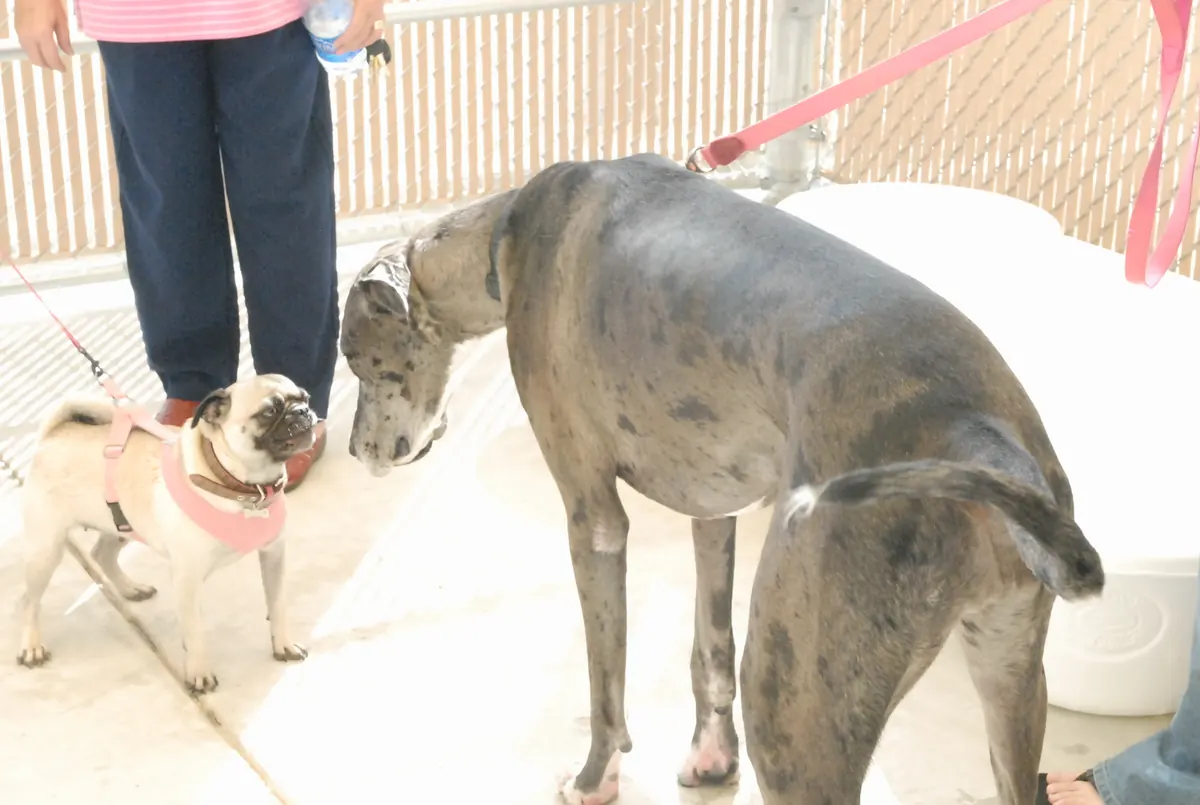
If you see the warning signs, calmly add distance and try again later, or another day. The full guide is in dog body language at the park.
What should I do at home the first days?
- Pick up toys, bones, chews and food bowls. These are the most common triggers.
- Feed the dogs in separate rooms or crates.
- Give each dog its own bed and a place to retreat.
- Supervise all time together at first, and separate them when you're out.
- Keep sessions short and positive; end before anyone gets tired or grumpy.
How do baby gates and crates help?
They let dogs get used to each other without full contact. A baby gate across a doorway means the dogs can see, smell and hear each other while each has a safe side, and nobody can be cornered. Many trainers call this "protected contact," and it's especially useful in the first week or with a nervous dog. Rotate which dog gets which room, so each one smells the other's spaces, and swap beds or blankets for the same reason. Crates work for meals and rest, as long as each dog already likes its crate; a crate should never be a place where the other dog can stand over it and stare in.
How do I introduce a puppy to an older dog?
Protect the older dog's peace. Puppies jump on faces, chew ears and don't take a hint, and many adult dogs tolerate it only up to a point. A low growl or a quick air snap from the adult is usually normal puppy teaching, not aggression, as long as the puppy isn't hurt and backs off. Your job is to step in before the adult has to: give the puppy its own play sessions with you, use a gate so the older dog can escape, and keep up the older dog's routine, walks and attention. Seniors with sore joints especially need a puppy-free place to rest.
What should the first week look like?
- Short, supervised time together several times a day, ending while both are still relaxed
- A daily walk together, side by side; shared walks are one of the easiest ways to build a calm bond
- Separate rooms or crates whenever nobody can watch, including quick errands
- One-on-one time with each dog, so the resident dog doesn't lose its routine
- Watch for guarding of things that aren't food: a favorite couch, a doorway, or a person's lap
- Calm arrivals at home; excited greetings at the door are a common flash point
Does it matter if both dogs are the same sex?
It can. Many trainers and behaviorists see more frequent or more serious conflict in same-sex pairs, particularly between two females, while male and female pairs tend to settle more easily. It's a tendency, not a rule: plenty of same-sex pairs live happily together, and personality, age and energy level matter more than sex. If you're choosing a second dog, a calm adult whose temperament is already known is often a safer bet than a puppy of the same sex as a pushy resident dog.
How long does it take for two dogs to get along?
Some dogs are friends in an afternoon. Others need weeks. An older resident dog may need more time and more breaks from a bouncy puppy. Let them set the pace.
Is the dog park a good place for a first meeting?
Usually not for a dog you're bringing home. A busy dog park adds lots of other dogs, noise and competition, and you have less control. A neutral, quiet place is better. Once they're comfortable together, a quiet park visit can be fun. See is your dog ready for the dog park?
What if the introduction goes badly?
Separate the dogs calmly and give them a break. Don't punish growling; it's a warning that helps prevent bites. If there's a fight, don't put your hands between the dogs; see how to break up a dog fight. If tension continues, talk to a certified behavior professional or your vet before trying again.
What about visiting a friend's dog over the holidays?
Use the same steps: meet outside first, then go in. And keep holiday food off the floor. See holiday travel with a dog.
Frequently asked questions
How do you introduce two dogs for the first time?
On neutral ground, on loose leashes with two handlers, walking in parallel first, then with short sniffs.
Should dogs meet on or off leash?
Start on loose leashes, on neutral ground. Tight leashes add tension.
How long should the first sniff last?
A few seconds, then call the dogs away and walk on. Repeat if both stay relaxed.
How long does it take dogs to get used to each other?
From a day to several weeks. Let the dogs set the pace.
Is it normal for my older dog to growl at a new puppy?
Often, yes. A short growl that makes the puppy back off is normal communication. Step in if the growling turns into snapping that connects, or if the older dog seems stressed or keeps hiding.
Can two female dogs live together?
Many do, but same-sex pairs, especially two females, are more likely to have serious conflicts. Temperament and a careful introduction matter more than sex alone.
Should I let the dogs work it out?
No. Supervise, manage triggers like food and toys, and separate them if tension rises.
Sources: ASPCA, guidance on introducing dogs; Humane World for Animals (formerly the Humane Society of the United States), "Introducing your new dog to your other dogs"; American Veterinary Society of Animal Behavior, resources on canine body language. This guide is general information; for dogs with aggression problems, talk to a veterinarian or a certified behavior professional.