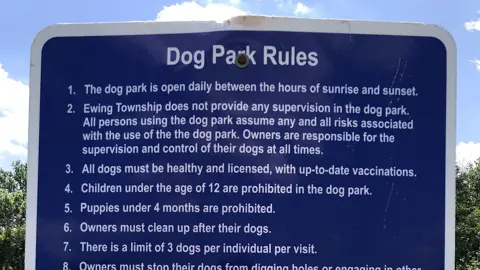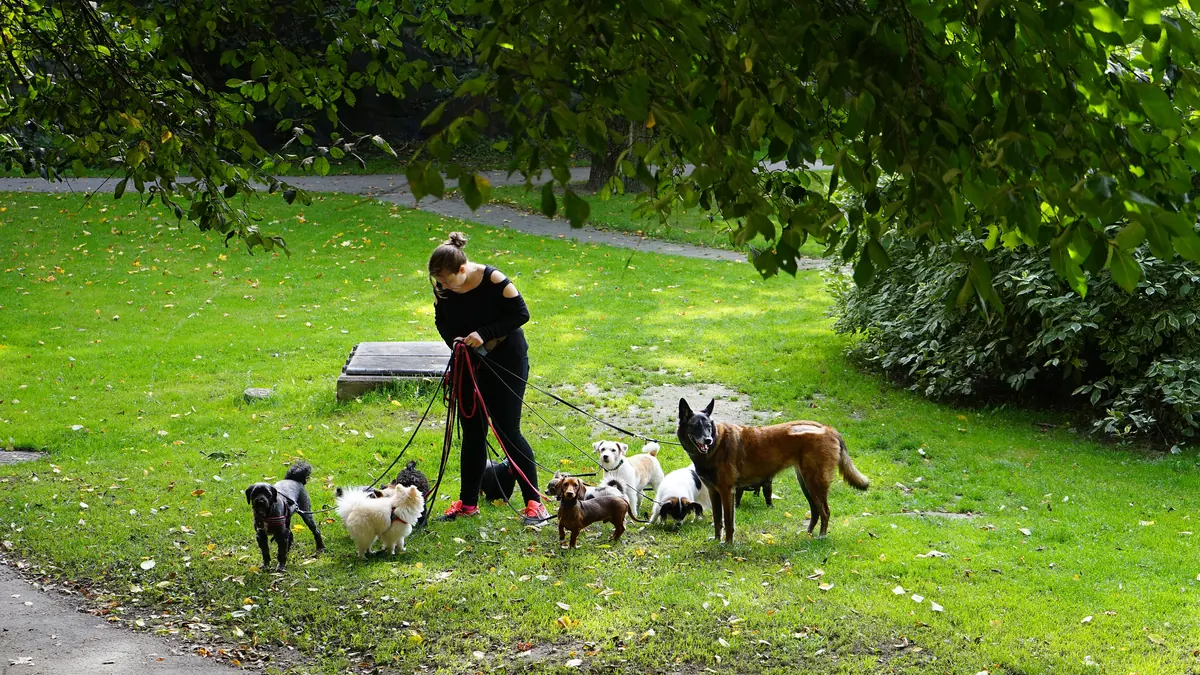
Dog daycare and dog parks solve different problems. A daycare watches your dog for the whole day, screens other dogs for vaccines and temperament, and has staff managing play, but it costs money every visit. A dog park is free and great for a quick run with you right there, but anyone can show up, nobody screens vaccines, and you're the one supervising. Daycare fits dogs who are alone all day; the dog park fits owners who want a short outing together.
In this guide
- How do they compare?
- When is daycare the better choice?
- When is the dog park the better choice?
- What should I look for in a daycare?
- What happens on an evaluation day?
- How do I know if my dog enjoys daycare?
- Can a dog go to daycare too much?
- Do daycare and dog parks spread the same diseases?
- What are the alternatives?
- Which dogs aren't a fit for either?
- Frequently asked questions
Many dogs do well with both. Some do well with neither, and that's fine too.
How do they compare?
| Dog daycare | Dog park | |
|---|---|---|
| Cost | Paid per day or by package; varies by city | Almost always free; a few cities charge a tag or pass |
| Supervision | Trained staff | You |
| Vaccine checks | Usually required (often rabies, DHPP, Bordetella) | Rarely checked at the gate |
| Temperament screening | Usually an evaluation day | None |
| Time | Hours, full or half day | Usually 20 to 60 minutes |
| Your involvement | Drop off and pick up | You're there the whole time |
In the official rules we compiled, Chicago charges $10 per dog per year for a required dog park tag and Indianapolis runs a paid pass. Most other cities' parks are free. See dog park rules in 20 US cities.
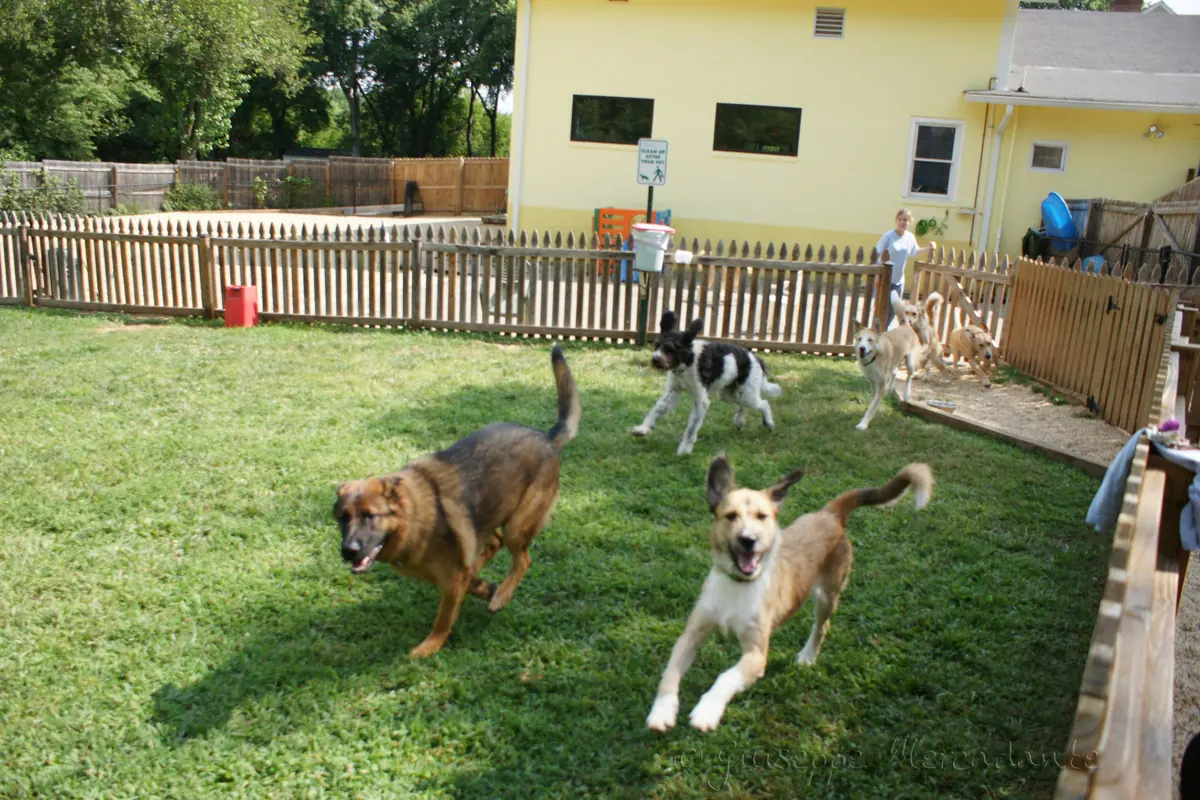
When is daycare the better choice?
- Your dog is home alone for long workdays and gets bored or anxious.
- Your dog loves other dogs but needs structured play.
- You can't get to a park regularly.
- Your dog is young and full of energy, and a single walk isn't enough.
When is the dog park the better choice?
- You want time with your dog, not time away from it.
- Your dog needs a short, intense run, not a full day of play.
- Budget matters.
- Your dog is social but gets tired or cranky after a long day with other dogs.
Before the first visit, check is your dog ready for the dog park? and dog park etiquette.
What should I look for in a daycare?
- A temperament evaluation before the first full day.
- Required vaccines for all dogs.
- Dogs grouped by size and play style.
- A reasonable staff-to-dog ratio, and staff who can explain how they handle scuffles.
- Rest time built into the day.
- Clean floors, water available, shade and climate control.
- Clear policy on what happens if your dog gets hurt or sick.
Ask to see the play area, not just the lobby, and visit at a busy time of day. A tour at 7 a.m. with three dogs tells you little about the room at noon.
What happens on an evaluation day?
Most daycares start with a trial of a few hours. Staff usually introduce your dog to one calm "helper" dog first, then to a small group, while they watch how it handles greetings, play, toys and being handled by people. Some dogs aren't accepted, and that's useful information, not a failure: a dog that's overwhelmed in a group would have a stressful day there anyway. Ask for specific feedback either way, such as which dogs it played best with and what made it uneasy.
How do I know if my dog enjoys daycare?
Watch the drop-off and the evening after. A dog that pulls toward the door, greets the staff and comes home pleasantly tired is usually having a good time. Be cautious if your dog:
- Hangs back, hides behind you or tries to leave at drop-off
- Comes home exhausted, hoarse from barking, or with scrapes and bite marks more than once
- Gets diarrhea, stops eating or can't settle at night after daycare days
- Starts reacting more to other dogs on walks
- Gets "report cards" that keep mentioning time-outs or hiding in a corner
Many daycares offer webcams; a few minutes of watching on a normal day shows you whether your dog plays, rests, or spends the day trying to stay out of the way.
Can a dog go to daycare too much?
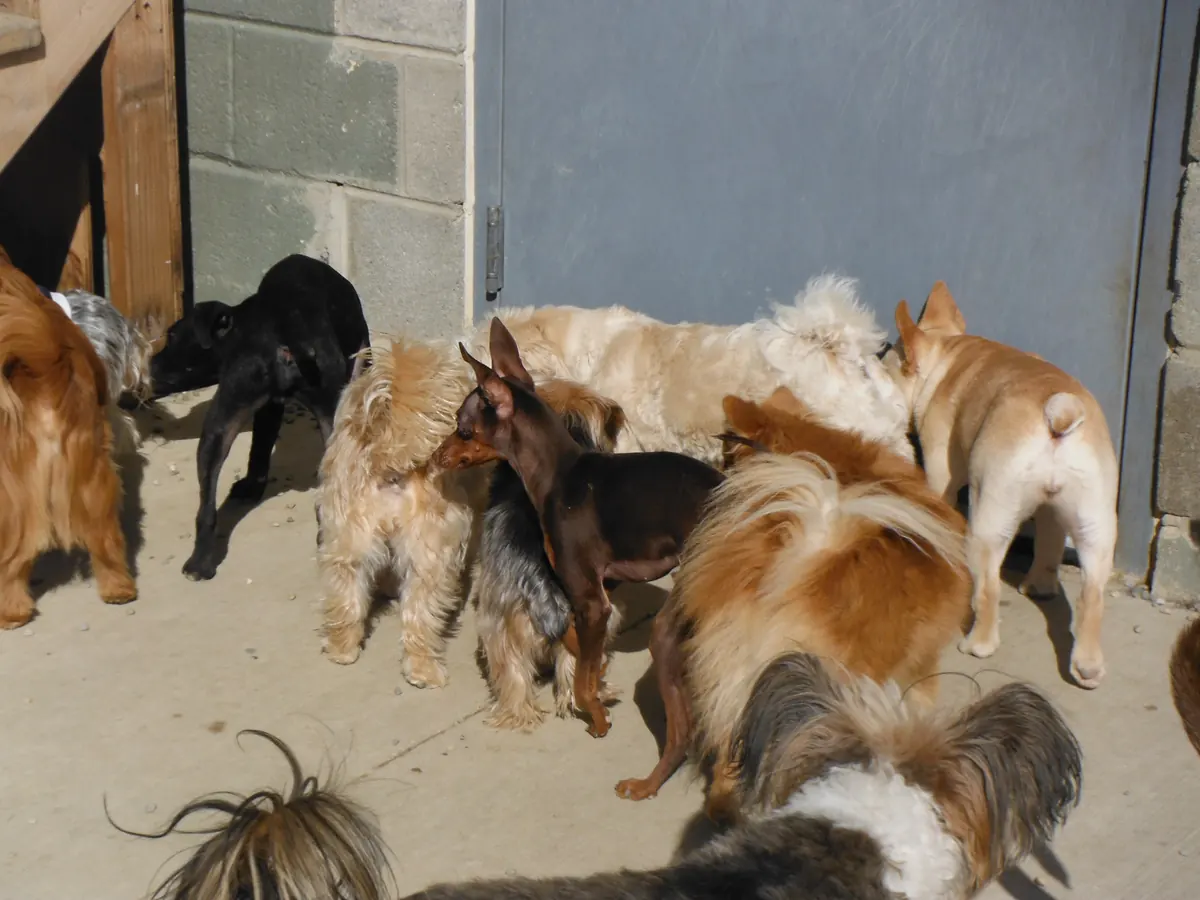
Yes. A full day of play is a lot of excitement, and some dogs get overtired and cranky rather than relaxed, the dog version of a toddler after a birthday party. Many trainers suggest two or three days a week, with quieter days in between. If your dog needs company every weekday, mixing daycare with a midday walker or a calm pack walk can give the same relief with less stimulation.
Do daycare and dog parks spread the same diseases?
Yes. Any place where dogs share air, water and ground can spread kennel cough, giardia and other infections. Daycares reduce the risk with vaccine rules and cleaning, but don't eliminate it. In 2021, a large leptospirosis outbreak in Los Angeles County was traced mostly to dogs that had been at daycare and boarding facilities, which is why vets there now push the lepto vaccine for group-play dogs. See kennel cough, leptospirosis in dogs, giardia in dogs and dog park diseases and vaccines.
What are the alternatives?
Not every dog needs a crowd to be happy. A midday dog walker breaks up a long workday without the excitement of a playgroup. Small "pack walks" with a few known dogs give social time with more structure. Some cities have private yards you can rent by the hour, so your dog can run off leash alone or with a friend. And for many adult dogs, a long sniff walk does as much good as an hour of wrestling: sniffing is mentally tiring in a calm way.
Which dogs aren't a fit for either?
Dogs who are fearful of other dogs, guard toys or food, play much too rough, or are very old or unwell. For them, walks, sniff time, training games and play dates with one known dog are often better. The signs to watch are in dog body language at the park.
Frequently asked questions
Is dog daycare better than a dog park?
Neither is better for every dog. Daycare offers supervision and screening for long days; the dog park is free and great for short outings with you.
Do dog parks check vaccines?
Rarely at the gate, although some cities require licenses and vaccines by rule. Daycares usually check records.
How often should a dog go to daycare?
Many dogs do well with two or three days a week. Watch for signs your dog is overtired.
Are dog parks free?
Almost always. Chicago requires a $10 yearly tag and Indianapolis has a paid pass, according to the rules we compiled.
What is a daycare temperament evaluation?
A trial of a few hours where staff introduce your dog to one calm dog, then a small group, to see how it handles play, toys and people before accepting it for full days.
How can I tell if my dog likes daycare?
Eager at drop-off and relaxed in the evening are good signs. Hiding at drop-off, repeated injuries or stomach upset after daycare days suggest it's not a good fit.
Can a dog get sick at daycare?
Yes, like at any place where dogs mix. Vaccine rules and cleaning lower the risk.
Sources: official dog park rules of 20 US cities, compiled in our guide "Dog park rules in 20 US cities" (including Chicago's DFA tag and Indianapolis's pass system); American Veterinary Medical Association and American Animal Hospital Association resources on canine infectious disease in group settings; Los Angeles County Veterinary Public Health, 2021 canine leptospirosis outbreak. This guide is general information.