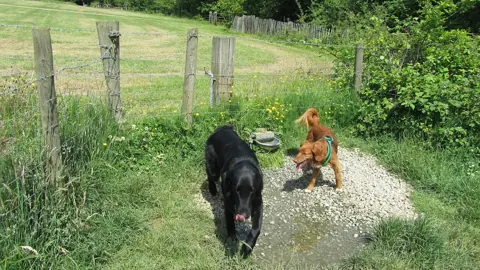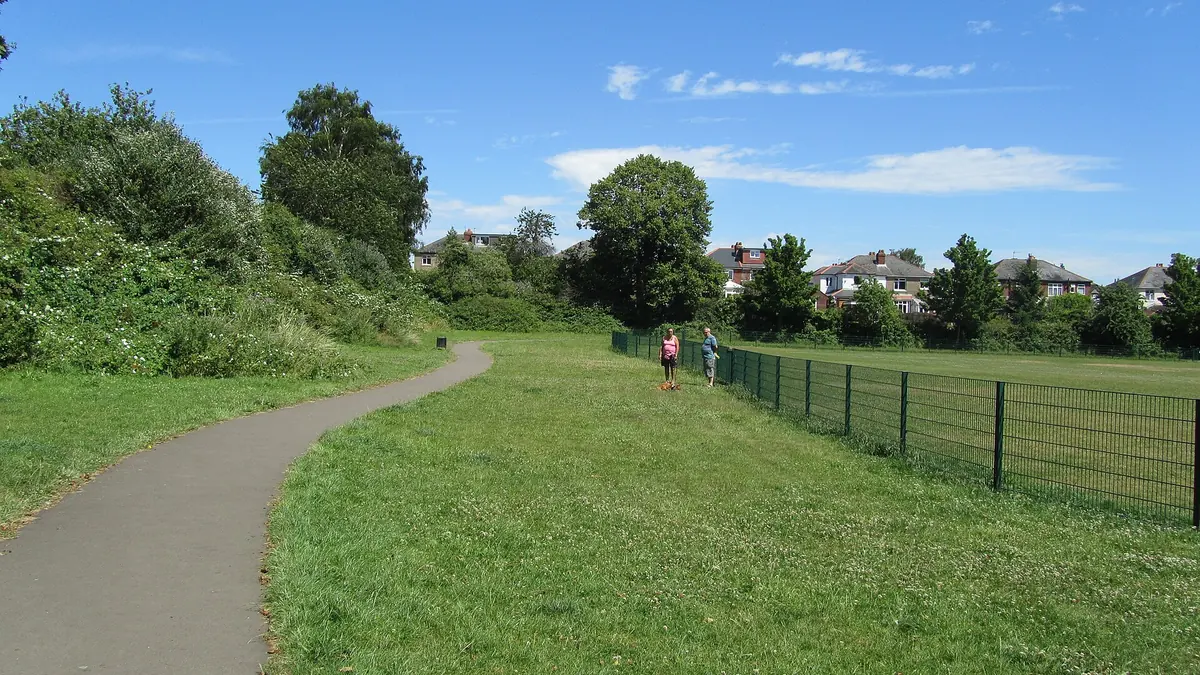
An off-leash area is any place where your dog may legally be unleashed; a fenced dog park is one kind of off-leash area, enclosed with a fence and usually a double-gated entry. Many off-leash areas are not fenced — they're open lawns, trails or beaches marked by signs, and some are only off-leash at certain hours. Which one is right depends mostly on one thing: whether your dog reliably comes back when called.
In this guide
We researched the official dog park rules of 20 large US cities, and the mix of fenced and unfenced areas varies more than most people expect. This guide explains the differences, shows how cities handle them, and gives you a simple way to decide.
The three kinds of off-leash space
| Type | What it is | Best for | Main risk |
|---|---|---|---|
| Fenced dog park | An enclosed yard, usually with a double-gated "airlock" entry | Dogs still learning recall, small dogs, new visitors | Crowding and tension in small spaces |
| Unfenced off-leash area | An open field, trail or shoreline where signs allow off-leash dogs | Confident dogs with solid recall that need room | Dogs bolting toward roads, wildlife or people |
| Off-leash hours | A regular park where dogs may be unleashed only at set times | Early risers and night owls in dense cities | Tickets for being a few minutes late |
How big cities actually do it
From the cities we covered, here's how different the approaches are:
- Phoenix — every one of its 13 city dog parks is fully fenced with a double-gated entrance.
- Seattle — nearly all 16 off-leash areas are fenced, including Magnuson Park's 8.6 acres.
- Nashville — all 14 Metro dog park areas are fenced.
- Austin — the opposite: most of its 12 official off-leash areas are open sections of larger parks, marked by signs. West Austin Park is the notable fully fenced one.
- Portland — a mix: 13 fenced areas and more than 20 unfenced, signed ones, some as small as a single path.
- San Francisco — also mixed. Bernal Heights' hilltop Dog Play Area is nearly 14 acres of open ground; many neighborhood areas are small enclosures.
- New York City — both systems at once: more than 80 fenced dog runs, plus designated areas where dogs may be off leash only before 9 a.m. and after 9 p.m.
- Boston — a rotating off-leash parcel on Boston Common, which moves between lawns to let grass recover.
The takeaway: "dog park" can mean a small fenced yard in one city and an open hillside in another. Always check what kind of space you're heading to.
Fenced dog parks: pros and cons
Why owners like them
- Containment. If your dog ignores you for a minute, it can't reach a road.
- Separate sections. Many fenced parks split small and large dogs. Some cities set a size line — Fort Worth's small-dog areas are for dogs under 40 pounds; Portland's are for dogs under 19 inches tall.
- Predictable. Amenities like water fountains, benches and waste stations are common.
What to watch for
- Crowding. Small fenced parks concentrate energy. Ten dogs in a quarter acre behave differently from ten dogs on a field.
- The gate. Most conflicts start at the entrance, where arriving dogs meet a crowd head-on. Use the airlock properly: close one gate before opening the other, and unclip your leash inside the airlock.
- Nowhere to escape. A dog that wants distance from another dog can't get far. Watch for a dog trying to hide — that's your signal to take a break.
Unfenced off-leash areas: pros and cons
Why owners like them
- Space. Open areas are usually much bigger — Seattle's largest, and Austin's big district parks, give dogs real room to run.
- Natural play. More room means dogs spread out, and tension drops.
- Variety. Trails, creeks and hills make more interesting walks.
What to watch for
- Recall is non-negotiable. In an unfenced area, your voice is the fence.
- Boundaries can be subtle. Off-leash sections often end at a path or a sign, and the rest of the park is leash-required. In Austin's Walnut Creek District Park, for example, the off-leash area excludes the parking lots, pool and picnic areas, and part of the creek.
- Roads and wildlife. Some unfenced areas run alongside busy streets — Austin's Shoal Creek Greenbelt sits next to Lamar Boulevard.
Off-leash hours: the New York model
In dense cities, giving over parkland full time to dogs isn't practical, so some cities share it by the clock. New York is the best-known example: in designated areas, dogs may be off leash from park opening until 9 a.m. and from 9 p.m. until closing. A few areas allow only the morning window.
If you use off-leash hours:
- Watch the clock. At 9:01 a.m., an unleashed dog is a violation.
- Remember the exclusions. Playgrounds, ball fields and fountains stay off limits even during off-leash hours.
- Expect a crowd at 7 a.m. — the morning window is when everyone goes.
How to decide: the recall test
Before using an unfenced area, try this in a safe, enclosed space with mild distractions:
- Let your dog get interested in something — a smell, another dog at a distance, a toy.
- Call once, in a normal voice.
- Count: does your dog turn and come within about three seconds?
- Repeat several times over a few days, with bigger distractions each time.
If your dog comes back reliably — including when another dog is running past — you're ready for unfenced areas. If not, stick to fenced parks while you train. There's no shame in that; it's what fenced parks are for.
Which to choose, by dog
| Your dog | Best choice |
|---|---|
| Puppy (over the minimum age) or new rescue | Fenced, at quiet times |
| Small or shy dog | Fenced with a separate small-dog section |
| High-energy dog with solid recall | Unfenced area with room to run |
| Sighthound or strong prey drive | Fenced — even good recall can fail when a squirrel runs |
| Dog that's reactive at gates | Unfenced or a quiet fenced park at off-peak hours |
| Senior dog | Small fenced park or an unfenced walk at its own pace |
Rules that apply to both
Whether fenced or open, most cities share the same core rules:
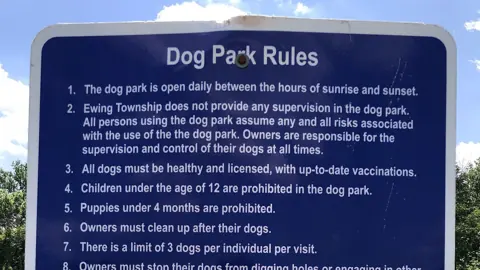
- Leash on the way in and out. The off-leash rule applies only inside the designated area.
- Carry a leash anyway. Several cities, including Portland and Houston, require it.
- Current rabies vaccination and license.
- No females in heat, no aggressive dogs.
- Pick up after your dog.
For the full list of common rules and how to handle problems, see our guide to dog park etiquette.
Frequently asked questions
What is the difference between an off-leash area and a dog park?
An off-leash area is any place where dogs may legally be unleashed. A dog park is usually a fenced off-leash area. Many off-leash areas are open fields or trails with no fence.
Are all dog parks fenced?
No. Some cities, like Phoenix and Nashville, fence all of theirs. Others, like Austin, designate open sections of larger parks marked only by signs.
Is it legal to let my dog off leash in a regular park?
Generally not. Most US cities require leashes everywhere except designated off-leash areas, and some, like New York, allow off-leash dogs only at specific hours in specific places.
How do I know if my dog is ready for an unfenced area?
If your dog reliably comes back when called — within a few seconds and even with other dogs around — it's likely ready. If not, use fenced parks while you train.
What is a double-gated entry?
An entry with two gates and a small pen between them. You close the outer gate before opening the inner one, so no dog can slip out.
Based on the official dog park rules and listings of 20 US cities, researched by Pawnauta Editorial in 2026. Rules vary by city and park — always follow the posted signs.